How to Write Action Scenes That Keep Readers on Edge
Writers visualize the sequence in their heads. Every punch, every dodge, every desperate scramble for a weapon. But when they write it down, something goes wrong. The scene that felt electric in imagination lands flat on the page. Readers skim instead of sweat.
Action scenes are deceptively difficult. They require a different set of techniques than slower, more introspective passages. Here's how to write action that actually works.
Speed Comes From Sentence Structure
The single most important tool for action scenes is sentence length. Short sentences create speed. They punch. They drive forward. Long, flowing sentences with multiple clauses and extended descriptions slow the reader down, creating a contemplative pace that works against the urgency of action.
Compare these two versions:
Slow: Sarah, realizing the attacker was coming straight for her and that she had only seconds to react, quickly reached for the knife on the counter, her heart pounding with fear as she grasped the handle.
Fast: The attacker lunged. Sarah grabbed the knife. No time to think. She swung.
The second version isn't better because it's shorter overall; it's better because each sentence is short, creating a staccato rhythm that mirrors the rapid-fire nature of combat. Readers move through short sentences quickly, and that speed translates into felt urgency.
This doesn't mean every sentence in an action scene should be three words. Like other scenes, they need variety. Use short sentences for clashing swords, and long sentences for your protagonist to catch their breath, pause at the critical moment, and process what happened.
Choose Strong Verbs in Action
Action scenes live or die by their verbs. Weak verbs padded with adverbs drain energy from your prose. Strong, specific verbs create vivid images without extra words.
Weak: He quickly ran toward her and forcefully pushed her out of the way.
Strong: He sprinted toward her and shoved her aside.
"Sprinted" is more specific than "quickly ran." "Shoved" is more visceral than "forcefully pushed." Every adverb is an opportunity to find a better verb instead.
Watch for these common verb weaknesses in action scenes:
- Forms of "to be" (was, were) that create passive constructions
- Generic verbs like "moved," "went," "got"
- Overreliance on "started to" or "began to"—just have them do it
- Filter verbs like "saw," "heard," "felt" that add distance
Instead of "She saw the blade coming toward her face," try "The blade sliced toward her face." The threat is immediate, not observed. We've written extensively about adverbs in fiction, so we won't go further here. If you need a refresher, here's the guide to mastering adverbs in fiction.
Clarity Over Choreography
Writers often try to capture every beat of a fight, describing each punch, block, and counter in precise detail. This usually backfires. Overly choreographed action becomes tedious to read and hard to follow.
Readers don't need a complete map of every movement. They need to understand what's happening, who's winning, and what's at stake. Describe a key detail and let their imagination fill in the blanks. Focus on:
- Key moments: The turning points, the close calls, the decisive blows, and why it matters
- Spatial relationships: Where are characters relative to each other and the environment?
- Status shifts: Who has the upper hand? When does that change?
You can skip over routine exchanges. "They traded blows, neither gaining ground" covers a lot of action in a few words, saving your detailed prose for the moments that matter.
If readers have to reread a paragraph to understand what happened, your choreography is too complex. Simplify until the action is crystal clear on first read.
Use All Senses
The best action scenes are visceral. We feel them in our bodies as we read. This comes from sensory details that go beyond what characters see.
Include:
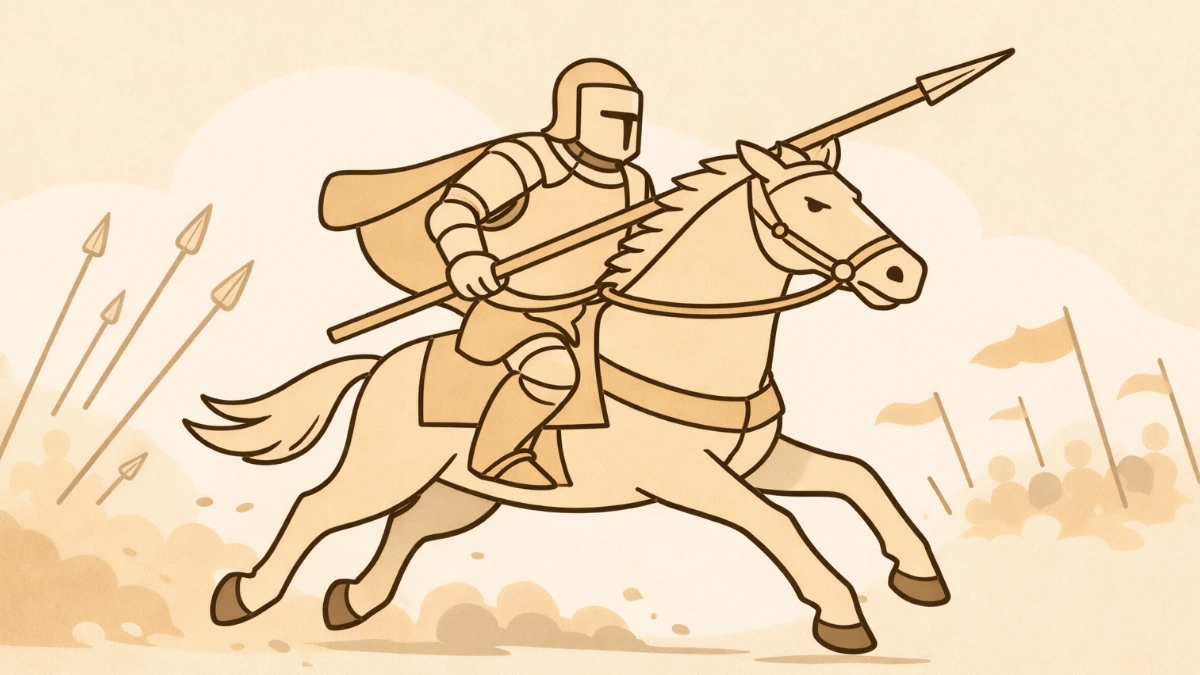
- Physical sensation: Burning lungs, aching muscles, the shock of impact, the exhaustion. E.g. the sting of dust in eyes as a plume of dust rises in the heat of battle.
- Sound: The crack of bone, the roar of an explosion, the clang of metal. E.g. a cawing crow over a suddenly silent field. The clicking of a spinning wheel from an upturned chariot
- Smell and taste: Blood, smoke, dust, sweat. E.g. The sharp, chemical scent of tar from a burning building.
- Proprioception: The feeling of falling, of losing balance, of a weapon's weight. E.g. The moment a character hits the water after falling from a ship
These details pull readers into the character's body. We're not watching the fight from outside. We're in it.
Yet as with any rule, use your good sense. One or two sensory details per beat is plenty. Cataloguing every sensation slows the pace you're trying to create.
Emotion Drives Stakes
A technically proficient action scene can still fall flat if readers don't care about the outcome. What makes action gripping is the emotional stakes. I.e. what your characters stand to lose.
Before writing the scene, be clear about what's at risk beyond physical survival:
- What are they fighting for?
- What internal conflict is playing out during the external one?
- What does the character stand to lose?
Weave these stakes into the action. A character protecting someone they love fights differently than one fighting for their own survival. A character facing their greatest fear responds differently than one doing routine work. Is your character scared to lose because it will crack their worldview? Are they frightened to face their father if they surrender? Let the emotional context colour the physical action.
This is where tension lives. Not only in the punches thrown, but in what hangs in the balance.
White Space Is Your Friend
Dense paragraphs work against action scenes. They signal to readers "slow down and absorb this." You want the opposite.
Along with short sentences, you'll want to use short paragraphs. Let key moments stand alone. Don't be afraid of one-sentence paragraphs for emphasis.
A line break after a gunshot. A paragraph break before a revelation. These pauses create rhythm and pace and impact. They're the prose equivalent of a dramatic beat in film.
Look at your action scenes and ask: where can I add white space? Where can I break a long paragraph into shorter ones? The visual experience of reading affects the felt pace.
Common Mistakes
The play-by-play. Describing every single movement in exhaustive detail. Skip to the important beats.
Losing track of space. Characters who were across the room are suddenly next to each other. Keep spatial relationships consistent and clear.
Stopping for introspection. Long internal monologues in the middle of a fight shatter momentum. Save reflection for before or after.
Consequence-free action. If the hero takes hits but seems unaffected, the action loses weight. Let injuries matter, at least until adrenaline wears off.
Overusing the same beats. If every fight involves the hero getting knocked down, struggling up, and barely winning, readers will start skimming. Vary your action patterns.
Only describing visuals. Readers need to see what's happening in their head, but that's not all they need to imagine. They need to taste the sand, hear the ring in their ear, and feel the sweat slickening their fingers.
The Aftermath Matters
Great action scenes don't end when the fighting stops. The physical and emotional aftermath grounds the action in reality and gives readers time to process what happened.
Show the shaking hands. The inventory of injuries. The delayed emotional reaction. The cost.
This cooldown serves double duty: it makes the action feel consequential, and it provides pacing relief before the next plot beat. Constant action exhausts readers. The quiet moments make the loud ones land harder.
Practice Relentlessly
Action scenes are a skill, and skills improve with practice. Study action scenes you admire in prose. Notice how authors handle pacing, clarity, and emotion. Try rewriting action scenes from your favorite books in your own style.
Then write your own. Write them badly at first and revise until they work. Over time, you'll develop instincts for what makes action scenes sing on the page.
And if you want feedback on whether your action scenes are working, Inkshift can help. It analyzes pacing, prose clarity, and engagement across your manuscript, identifying scenes that might be dragging or confusing readers. Sometimes the issues in action scenes are hard to spot when you're too close to the work.
Your readers are waiting to be thrilled. Give them action worth remembering.