How to Overcome Writer's Block: Practical Strategies That Work
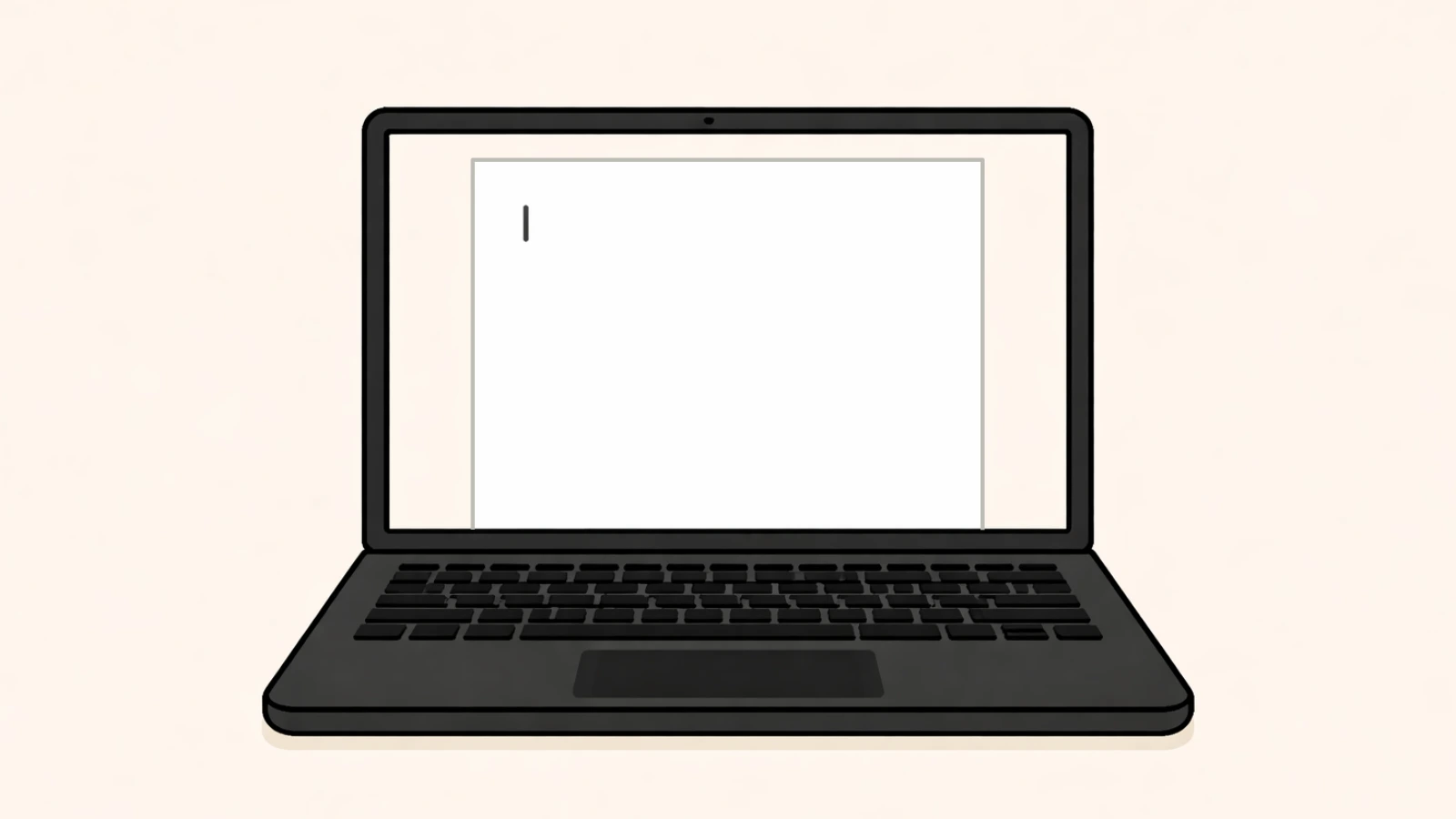
You sit down to write. The cursor blinks. An hour later, you've checked your email fourteen times, reorganized your desk, and written nothing.
Writer's block isn't a curse or a sign you're not meant to be a writer. It's a symptom, and like any symptom, it has underlying causes. Identify the cause, and you can treat it.
Here are the most common reasons writers get stuck, and how to break through each one.
Fear of Failure
The blank page is terrifying because anything you put on it can be judged. What if it's bad? What if you're not as talented as you hoped? What if people laugh?
Fear of failure manifests as perfectionism, endless planning that never becomes writing, and the conviction that you need to do more research before you start. It's more comfortable to have a perfect unwritten novel in your head than a flawed real one on the page.
The fix: Give yourself permission to write poorly (at first). First drafts are supposed to be rough. Your only job is to get words down. You can't edit a blank page.
Try setting a timer for twenty minutes and writing without stopping or editing. The words don't need to be good. They just need to exist. Often, once you break the seal, the fear loses its grip.
You Don't Know What Happens Next
Sometimes block isn't emotional. It's practical. You've written yourself into a corner and you don't know how to get out. Or you're facing a scene you haven't figured out yet. Or your outline has a gap you've been avoiding.
The fix: Stop writing forward and start problem-solving. Open a new document and brainstorm. Ask yourself questions: What does my character want in this scene? What's preventing them from getting it? What's the worst thing that could happen? What are five different ways this scene could go?
Talk through the problem out loud. Explain the situation to a friend, a rubber duck, or your phone's voice memo app. Often, articulating the problem reveals the solution.
If you're a plotter, this might mean revisiting your outline. If you're a pantser, this might mean skipping ahead to a scene you do know and coming back later.
For more on different planning approaches, see our guide on plotting vs. pantsing.
The Scene Is Wrong
Your subconscious is smarter than you think. Sometimes block is your brain's way of telling you something is wrong with your story: a character acting out of character, a plot point that doesn't work, a scene that shouldn't exist.
When you feel inexplicable resistance to writing a particular scene, that resistance might be meaningful. For example: it might be a scene where characters move from one place to another, without anything meaningful happening. That's usually a sign to cut it out. Pay attention to why you're avoiding writing.
The fix: Question your assumptions. Do you actually need this scene? Should it happen differently? Is the character in the right place emotionally? Did something go wrong in an earlier scene that's making this one impossible?
Sometimes the solution is deleting backward until you find where the story went off track. It's painful to cut words, but it's better than forcing a flawed story.

You're Exhausted
Writing requires cognitive resources. If you're tired, stressed, burned out, or depleted by the rest of your life, you won't have much left for creative work.
Your brain needs energy to create.
The fix: Rest. Actually rest, not "rest" while scrolling social media. Sleep enough. Take a real break from the project. Exercise. Spend time in nature. Do things that fill your bucket rather than drain it.
Sometimes the most productive thing you can do for your writing is not write for a few days. You'll return with more capacity than you had before.
You're Bored
If you're bored writing a scene, readers will be bored reading it. Boredom-based block often means you're writing scenes that don't need to exist, or writing necessary scenes in the most tedious way possible.
The fix: Skip the boring parts. Jump to the next scene that excites you. You can always bridge the gap later, often with a single transitional sentence.
An hour later, they emerged through the forest.
Shadows stretched as he waited in line.
Alternatively, ask what would make this scene exciting. Add conflict. Raise stakes. Cut it entirely and summarize in a paragraph. Your job is to write the interesting parts of your story, not to dutifully slog through every moment.
You've Lost Connection to the Story
Sometimes you start a project with passion that fades over months of work. The characters who once felt vivid now feel like strangers. The plot that seemed brilliant now seems pointless.
The fix: Reconnect with why you started. Reread your early notes, your original inspiration, your favorite scenes. Remember what excited you about this story.
If you can't reconnect, assess whether this is the right project for you right now. It's okay to set a manuscript aside and return to it later, or never. Not every started novel needs to be finished. But make sure you're abandoning it for the right reasons, not just because the middle is hard.

Distractions
A buzzing phone, a browser tab, a notification arriving at the wrong moment: these prevent the deep focus creative work requires. It's hard to get into flow if something is constantly pulling you out of it.
The fix: Remove distractions before you sit down. Put your phone in another room, use a focus mode, and close everything except your writing app. Full-screen tools that hide the rest of your desktop help.
A useful rule: during your writing window, don't allow yourself to do anything else. Not email, not browsing. Just sit with the page. You don't have to write, but you can't do anything else either. More often than not, you'll start writing simply because it's the only option. Our guide on how to finish your novel goes deeper on building the scheduling habits and discipline that make distraction-free sessions stick.
Environmental Blocks
Sometimes the problem isn't internal, it's practical. You don't have time to write. Your writing space is chaotic. You're constantly interrupted. Your tools aren't working.
The fix: Solve the practical problems. Wake up earlier. Find a different writing location. Turn off your phone. Get noise-canceling headphones. Work from a coworking space. Fix whatever external factors are sabotaging your sessions.
These fixes often feel less dramatic than confronting deep psychological blocks, but they're just as important. You can't write if the conditions won't let you.
Fear of Success
This one's sneakier. What if you finish and it's actually good? What if people expect more from you? Or what if you're never able to write something like it again?
Fear of success often looks like self-sabotage: getting stuck right before the finish line, finding endless reasons why the book isn't ready yet, or starting exciting new projects instead of finishing the current one.
The fix: Acknowledge the fear. Journal about what specifically scares you about finishing. Often, naming the fear reduces its power.
When to Push Through vs. Step Back
Not all block should be bulldozed. Sometimes pushing through is exactly right: you're just facing normal resistance, and discipline gets you past it. Other times pushing makes things worse: you're burning out or your story has real problems.
Signs you should push through:
- The resistance appears at the start of every session but fades once you begin
- You've been avoiding writing for emotional rather than practical reasons
- The scene is challenging and deep, but not wrong
Signs you should step back:
- Writing feels like grinding glass, painful and unproductive
- You've been forcing words for weeks with no improvement
- Your resistance is telling you something about the story
- You're exhausted in the rest of your life, not just at the keyboard
Trust yourself. You usually know which kind of block you're facing, even if you don't want to admit it.
Everyone Gets Blocked
Every writer you admire has stared at blank pages in despair. Block is part of the process, not a sign of failure. The writers who succeed aren't the ones who never get stuck. They're the ones who learn how to unstick themselves.
Diagnose the cause. Apply the fix. Return to the page.
And if your writer's block stems from uncertainty about whether your manuscript is working, Inkshift can provide quick, objective feedback. Sometimes knowing what's actually on the page, rather than fearing the worst, is enough to get you writing again.
The words are waiting. You just need to press the right keys.