
How to Edit Your Novel with ChatGPT (And Where It Falls Short)

ChatGPT is free to try, fast, and impressively capable for a wide range of tasks. Many writers have discovered it can give useful feedback on a difficult scene, catch a dialogue exchange that feels off, or help identify why a chapter isn't landing. But on longer manuscripts it breaks down.
In this article, we'll take an objective look at ChatGPT's strengths and limitations for fiction writing in 2026. Let's — get — started.
What ChatGPT Is Good At
For scene- and chapter-level feedback, ChatGPT, along with Claude and Gemini, is a capable reader. Its context window can hold a chapter comfortably, and when given a specific, critical prompt, it can identify real problems.
The keyword is specific. Vague prompts produce vague feedback. "What do you think of this chapter?" will produce a polite summary, fluffy and unwarranted praise, and maybe a few gentle notes. Yet the more targeted your question, the more useful the response.
ChatGPT is particularly good at:
- Identifying pacing problems within a scene. It can tell you when a scene drags, when tension deflates too early, or when an emotional beat is rushed.
- Flagging dialogue inconsistencies. It will notice when a character's voice shifts, when dialogue feels expository, or when dialogue is boring.
- Sentence- and paragraph-level suggestions. For line editing within a chapter (tightening prose, cutting redundancies, varying sentence rhythm), it's effective.
Prompts That Work
The difference between a useful ChatGPT editing session and a frustrating one is mostly in the prompt. Here are prompts that consistently produce actionable feedback:
For pacing:
"Read this scene critically. Does the tension build effectively, or does it stall? Identify the specific moments where momentum slows, and explain why."
For dialogue:
"Analyze the dialogue in this chapter. Is it natural? Does each character speak distinctly, or do they sound interchangeable? Flag any exchanges that feel expository or unearned."
For structural issues within a scene:
"What are the three biggest problems with this scene? Don't focus on prose quality. Focus on whether the scene is doing what it needs to do for the story."
For POV consistency:
"Is the point of view consistent throughout this scene? Flag any moments where the narrative camera feels like it shifts away from the POV character's immediate experience."
For opening hooks:
"Is the opening paragraph of this chapter strong enough to keep a reader reading? Be honest. If not, what specifically isn't working and why?"
For character:
"Based on this chapter alone, does the protagonist feel like a real person with a consistent interior life? Or do they feel like a vehicle for plot? Give specific examples."
One crucial instruction to add to almost any prompt: ask it to be critical. ChatGPT defaults to a supportive tone. It's trying to say what it thinks you want to hear. If you don't explicitly ask for honest criticism, you'll get needless praise, which might feel good in the moment, but won't help you (or your novel) improve. Try adding: "Don't soften the feedback. I need to know what isn't working."
And as ever with feedback, make sure to think critically about your work. ChatGPT, like beta readers, critique partners, traditional editors, or Inkshift, are all opinions. Take what resonates and discard the rest. More on how to sift through feedback here.
The Context Window Problem
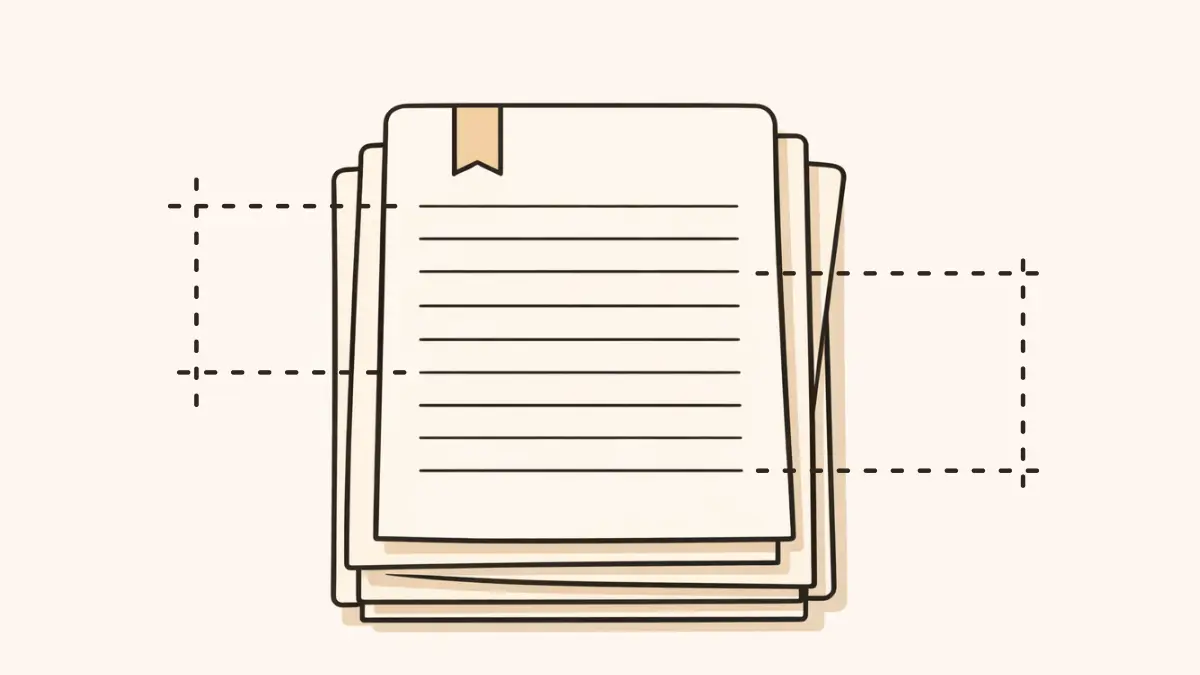
Now for the limitations. ChatGPT's context window, particularly on free plans, can't hold and understand an entire novel. And even if you upload a long document in a project, it will skim, create an internal document with notes, and sound capable. The problem is that when you dive a bit deeper, it breaks down.
On full manuscript, it fails to answer questions like:
- Does the character arc complete? ChatGPT can tell you whether the protagonist is interesting in Chapter 3. It cannot tell you whether their arc from Chapter 3 to Chapter 28 is cohesive or complete.
- Is the pacing working across the full story? It can tell you if a chapter is slow. It cannot tell you whether your Act 2 is dragging across 20 chapters.
- Are there consistency issues between early and late scenes? A detail established in Chapter 7 that contradicts something in Chapter 22 requires holding both in memory simultaneously. Across sessions, ChatGPT doesn't do this.
- Does the subplot pay off? It cannot evaluate whether a storyline introduced in Act 1 resolves satisfyingly by Act 3.
These are developmental questions, the most important questions for a novel. ChatGPT's architecture makes them impossible to answer reliably at novel length.
The Objectivity Problem
This one is subtler and worth taking seriously.
When you use ChatGPT for feedback on the same manuscript across multiple sessions, its objectivity degrades. It begins to co-author rather than critique, and uses its memory from past sessions in its answers. For example:
- You might ask if the setting would work better in Toronto vs. New York. The next time setting comes up, it might suggest moving to Toronto because it knows you liked that idea.
- You might disagree that a character seems flat, and it'll stop challenging you on that point from there on out.
- You might ask for better descriptions in your prose, and all suggestions afterward will hit all five senses in painful detail.
The practical result: the longer you use ChatGPT as your primary feedback source on a manuscript, the more it will confirm your decisions rather than challenge them. You'll start getting feedback that sounds like the notes you'd give yourself. Unfortunately, that won't help you improve.
A Realistic Workflow
Given these limits, here's how to use ChatGPT effectively as part of an editing process rather than as the whole process:
Use it chapter by chapter for the first pass. As you revise, paste individual chapters and ask targeted questions. Focus on scene-level problems: pacing, dialogue, character behavior, POV consistency. This is where it helps most.
Don't use it to evaluate arcs or structure. You'll get a response that sounds plausible, but it won't have seen enough of your manuscript to give you reliable structural analysis. Reserve arc and structure questions for a tool that can read the full manuscript.
Keep sessions fresh. If you've been going back and forth about a particular chapter for twenty messages, start a new conversation. The accumulated context is working against you at that point.
Use it for sentence-level polish after the structural work is done. It's good at line editing, but do this last. As we discuss at length in this article, polishing sentences in a chapter you later cut is wasted effort.
That is inherently an interactive, chapter-by-chapter workflow: you provide a passage, ask questions, and decide how to implement the response. If you would rather run one consistent pass across a finished manuscript, Inkshift's Line Editing feature handles the complete uploaded manuscript at once. ChatGPT is more useful when you want a back-and-forth about individual passages; Inkshift is designed for a single full-book pass.
When You Need Something Else
If what you need is a developmental assessment of the full manuscript, one that answers whether your novel is working as a story, ChatGPT isn't the right tool.
A developmental critique requires reading the whole manuscript at once: evaluating the arc from page 1 to page 300, tracking character consistency across every appearance, assessing whether the plot's promises are paid off, and how emotional beats land with readers. That requires a tool built specifically for novel-length analysis.
Inkshift is built for exactly this. Upload your full manuscript and receive a comprehensive editorial critique covering plot structure, character arcs, pacing, prose quality, and marketability. It's based on reading the entire novel, not fragments of it. The feedback isn't generically positive; for most authors, in fact, it will be quite critical.
ChatGPT for chapters. A purpose-built critique for the full manuscript. Used together, they cover the full range of what editing a novel actually requires.
Conclusion
ChatGPT is an effective editing tool for fiction writers. Use it at the scene and chapter level, give it specific prompts, and explicitly ask for criticism rather than validation. Be aware that its objectivity erodes as conversations lengthen, and don't use it to evaluate structural questions that require reading the whole book.
For the full manuscript assessment, you need a tool that can see the whole story at once. That's where ChatGPT's limits become most visible, and where purpose-built tools like Inkshift pick up.