What Is Head Hopping and How to Avoid It
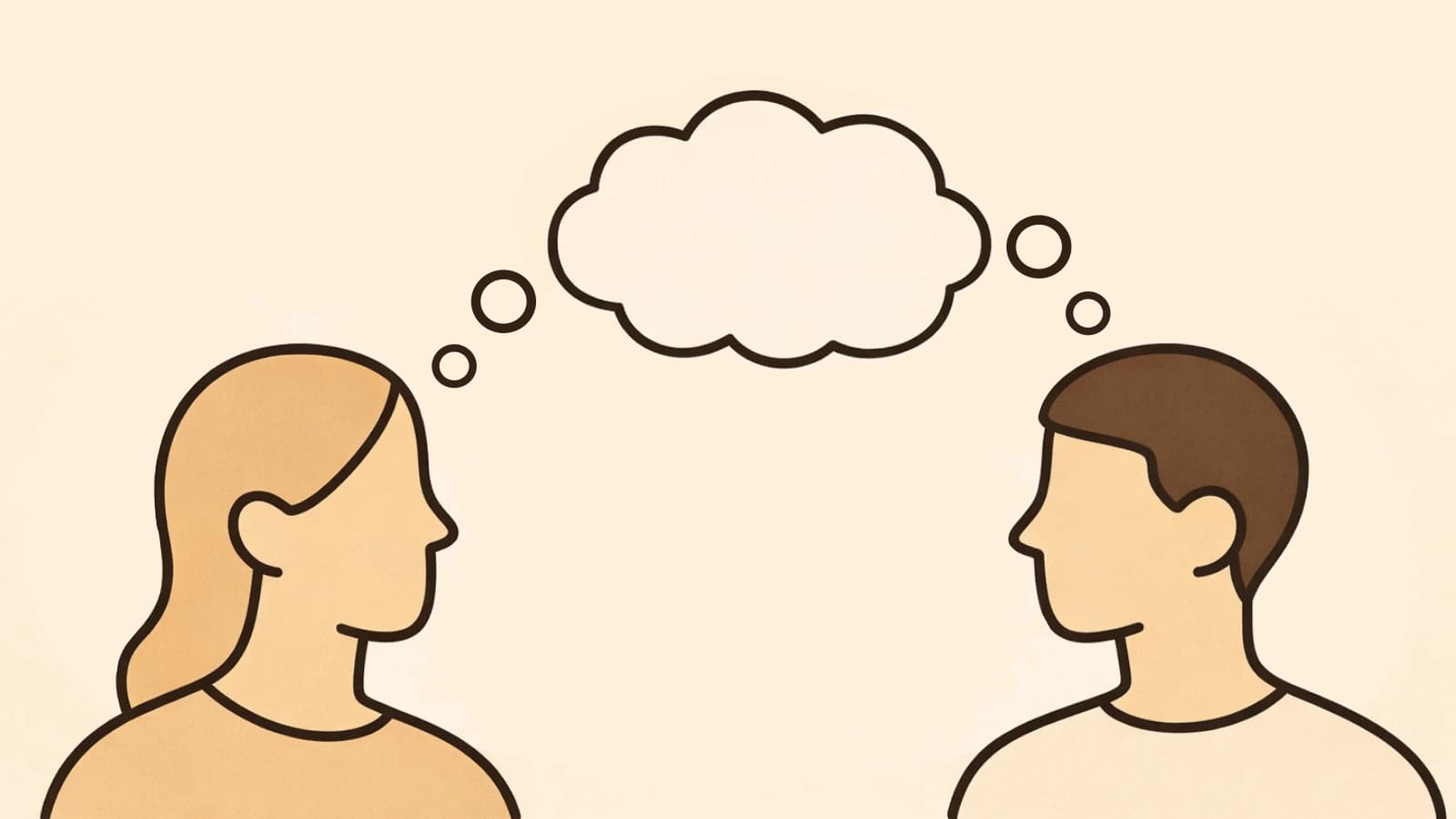
You're deep in a scene. Your protagonist Sarah is having a tense conversation with her ex-husband Mark. You're in Sarah's head, feeling her frustration, watching her clench her jaw. Then suddenly, mid-paragraph, you're inside Mark's head, knowing he feels guilty about the affair. Then back to Sarah. Then to the waiter who's nervous about interrupting them.
Congratulations. You've just head hopped your reader into confusion.
Head hopping is a common point-of-view mistake in fiction, yet many writers don't even realize they're doing it. Understanding what it is and how to avoid it will immediately strengthen your prose and keep readers from arching an eyebrow mid-page.
What Is Head Hopping?
Head hopping occurs when you switch between characters' internal thoughts and feelings within the same scene without a clear transitions.
Here's an example of head hopping:
Sarah stared at Mark across the table, her stomach churning with resentment. How dare he act so casual after everything? Mark noticed her expression and felt a pang of guilt. He wished he could explain, but the words wouldn't come. Sarah wanted to throw her wine in his face.
In this short passage, we've jumped from Sarah's internal experience to Mark's and back again. Readers don't know whose shoulder they're standing behind, and that uncertainty breaks immersion.
Head hopping is distinct from omniscient narration, though writers often confuse the two. Omniscient point of view involves a godlike narrator who can access any character's thoughts, but does so with deliberate control and a consistent narrative voice. Head hopping, by contrast, feels accidental and jarring, like the author lost track of whose perspective they were writing from.
Why Head Hopping Hurts Your Story
It Breaks Reader Immersion
When readers settle into a character's perspective, they're deep inside their point of view. They see what the character sees, feel what they feel. Every time you yank them into another head without warning, you're ripping them out of that immersive experience. They have to reorient themselves, figure out whose thoughts they're now privy to, and rebuild their emotional connection.
It Dilutes Emotional Impact
Part of what makes fiction powerful is limitation. When readers only know what your POV character knows, they share that character's uncertainty, fear, and hope. If Sarah doesn't know whether Mark still loves her, readers don't know either, and that creates tension.
Head hopping destroys this tension by giving readers too much information. If we know Mark feels guilty and wants to explain, the scene loses its mystery. We're no longer experiencing the conversation with Sarah; we're watching it from above, emotionally detached.
It Confuses Character Voice
Every character should have a distinct way of perceiving and interpreting the world. When you hop between heads within a scene, these voices blur together. Readers struggle to distinguish one character's observations from another's, and your carefully crafted character voices get lost in the shuffle.

How to Spot Head Hopping
The telltale sign of head hopping is access to multiple characters' internal states within the same scene. Ask yourself these questions:
Whose thoughts am I revealing? If you're showing what multiple characters think or feel without scene breaks, you may be head hopping.
Could my POV character know this? If Sarah can't see Mark's guilt (only his expression), then revealing his guilt is a POV slip.
Am I using filter words for multiple characters? Words like "felt," "thought," "knew," "wondered," and "realized" signal internal access. If these words apply to multiple characters in one scene, you're likely head hopping.
Here are some red flags to watch for:
- "He didn't know that she was planning..."
- "She thought X. He thought Y."
- "Little did she realize he was..."
- Describing one character's facial expression, then immediately explaining another character's internal reaction to it from their perspective
How to Fix Head Hopping
Commit to One POV Per Scene
The simplest fix is to choose one perspective character per scene and stick with them. Everything in that scene gets filtered through their perceptions. If you're in Sarah's POV, we can see Mark's clenched fists but not his guilt. We can hear his words but not his thoughts. We can watch Sarah interpret his behaviour, but her interpretation might be wrong.
This limitation is a feature, not a bug. It creates the uncertainty and drives reader engagement. Amazing plot twists can come from misunderstandings, or misleading readers with an unreliable point of view.
Use Scene or Chapter Breaks for POV Shifts
If you need to show multiple perspectives, do so across scene breaks or chapters, not within scenes. Many successful novels alternate between character perspectives, giving each their own dedicated sections. George R.R. Martin's A Song of Ice and Fire series is a masterclass in this technique, with each chapter clearly headed by the POV character's name.
Show External Behaviour, Not Internal Thoughts
When you're in Sarah's POV and need to convey Mark's emotional state, show it through observable details:
Mark's jaw tightened. He stared at his wine glass, turning it slowly by the stem. "Sarah, I..." He trailed off, shaking his head.
Sarah (and therefore the reader) can infer that Mark is struggling, perhaps feeling guilty or conflicted. Often, this is more powerful than simply stating it.
This is the show don't tell principle applied to point of view.
Let Your POV Character Interpret
Your POV character can speculate about others' thoughts and feelings. This maintains perspective while still giving readers insight:
Sarah watched Mark's shoulders slump. Guilt, probably. Or maybe just exhaustion. With Mark, it had always been impossible to tell.
Here, Sarah is interpreting Mark's body language. She might be right, she might be wrong, but we're firmly in her perspective throughout.
Head Hopping vs. Omniscient Narration
It's worth noting that omniscient narration, when done intentionally, can access multiple characters' thoughts. The difference lies in execution. Omniscient narration features a distinct narrative voice that exists above all characters, dipping into their minds with purpose and control. Classic authors like Jane Austen and Leo Tolstoy employed this technique masterfully.
Here's an example of what omniscient prose looks like:
Sarah believed Mark’s silence meant indifference. Mark believed his silence was mercy. Neither was right.
Notice the additional commentary that lets readers know this is intentional.
If you want to write in omniscient POV, commit to it fully. Establish your narrator's voice early, and move between perspectives with deliberate craft rather than accidental slippage. For most contemporary fiction, however, third-person limited remains the safer and often more effective choice. We cover this topic in-depth in our guide to tense and point of view.
Head hopping can be difficult to spot in your own work. That's where tools like Inkshift can help catch POV slips and inconsistencies across your manuscript, flagging scenes where the perspective becomes muddled.
Conclusion
Head hopping is one of those craft issues that readers feel even if they can't name it. They'll describe your writing as "confusing" or "hard to follow" without realizing the perspective shifts are the culprit. By committing to clear, consistent point of view, you create an invisible framework that lets readers focus on what matters: your characters, your story, and the emotions you're trying to evoke.
The next time you revise a scene, ask yourself: whose head am I in? If the answer is "everyone's," it might be time to choose.