How to Write Secondary Characters That Enrich Your Story
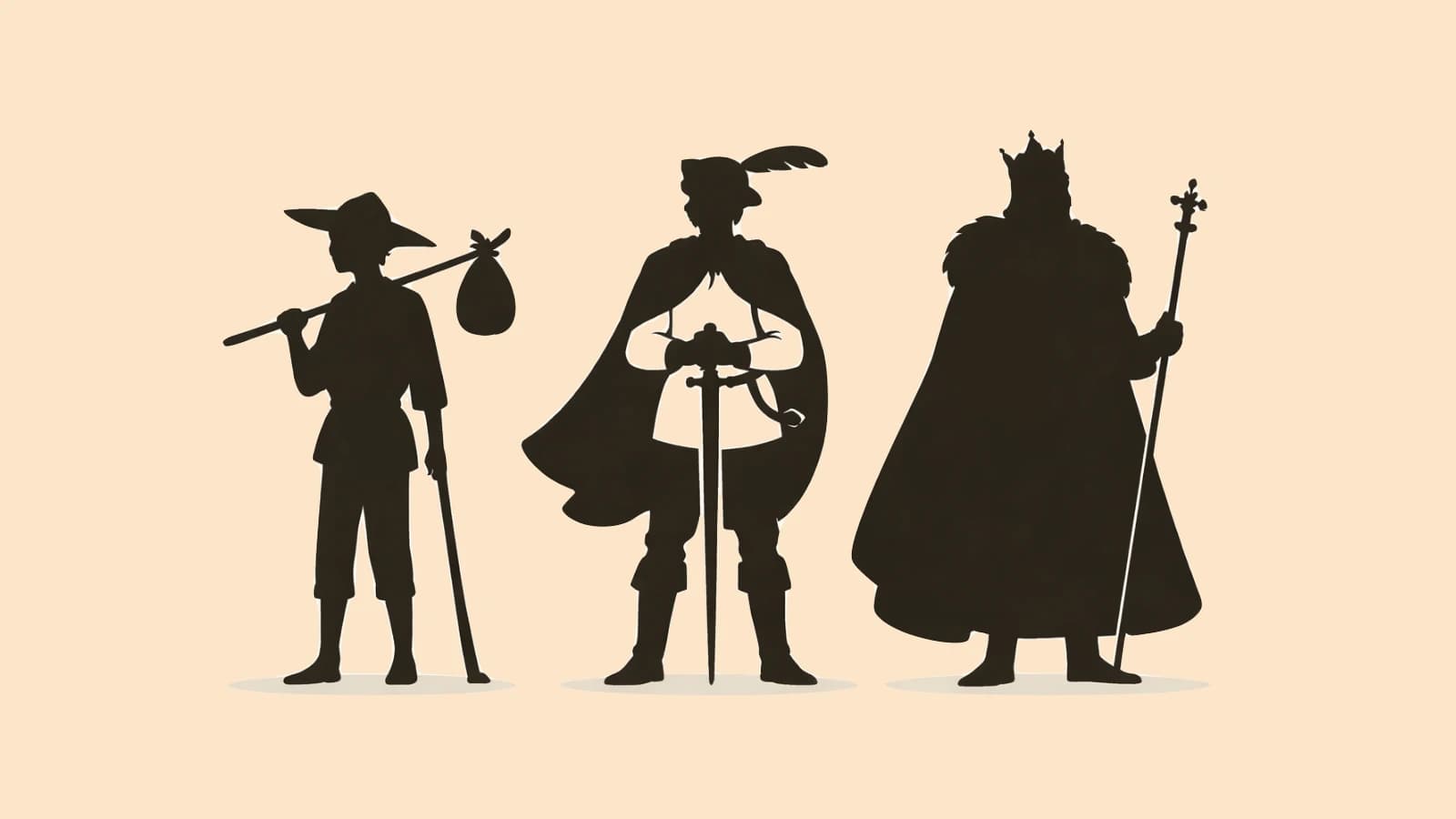
Every protagonist needs a world around them. Friends, enemies, mentors, rivals, love interests, coworkers. Secondary characters populate your story and bring it to life. But too often, these characters exist only to serve the protagonist's journey. They feel less like people and more like props for your hero to discover the theme.
The best secondary characters are as real as your main character. They have their own lives, desires, and arcs (even if we only glimpse fragments of them). Here's how to create a supporting cast worthy of your story.
Make Every Character Want Something
The simplest way to bring a secondary character to life is to give them a goal that exists independently of your protagonist. They're not just "the best friend" or "the mentor." They're a person with their own agenda who happens to intersect with your main character's story.
This goal doesn't need to be complex or even stated explicitly. A shopkeeper who wants to close early and get home to dinner. A coworker angling for a promotion. A neighbor protecting a secret. These small desires create friction and texture in every interaction.
When secondary characters exist solely to help or hinder your protagonist, they feel hollow. When they're pursuing their own goals and those goals happen to align or conflict with your protagonist's, they feel real.
Give Them a Life Off-Page
Your secondary characters exist when your protagonist isn't looking. They have histories, relationships, and daily routines that have nothing to do with your main plot.
You don't need to know every detail of their lives because that's wasted effort, but you should be able to answer basic questions like these:
- What do they do when they're not in scenes with the protagonist?
- Who do they care about outside this story?
- What's their greatest fear? Their secret shame?
- What were they like five years ago? What do they want five years from now?
This knowledge informs how you write them, even if the details never appear on the page. A character with a rich inner life behaves differently than a character who's been invented to serve a plot function. A character who recently quit smoking might react strongly if offered a cigarette. Small details are what make them feel real.
Distinguish Through Voice
If you covered the dialogue tags, could readers tell your secondary characters apart? Each character should have a distinct way of speaking that reflects their background, education, personality, and emotional state.
Consider varying:
- Vocabulary: A professor uses different words than a mechanic.
- Sentence structure: Some people speak in fragments. Others in elaborate, qualified sentences.
- Speech patterns: Interrupting, trailing off, asking questions, making statements.
- Topics: What do they gravitate toward in conversation? Avoid?
- Subtext habits: Are they direct or evasive? Do they say what they mean?
You don't need to give everyone a catchphrase or verbal tic, yet each character's voice should feel like it belongs to a specific person, not interchangeable dialogue assigned arbitrarily.
We've written extensively on dialogue in the past, so we won't go deeper here. If you're interested in further reading, here's our guide to writing dialogue.

Define Their Role Clearly
Secondary characters typically serve one or more functions in your story:
The confidant: Someone the protagonist can talk to, externalizing internal conflict through dialogue. Often a best friend or sibling.
The mentor: Someone who provides wisdom, training, or guidance. Often has their own arc of letting go or being surpassed.
The foil: Someone whose contrasting qualities highlight the protagonist's traits. Can be friend or enemy.
The love interest: Someone whose relationship with the protagonist provides romantic tension and emotional stakes.
The antagonist's ally: Someone who serves the villain, providing obstacles and complications.
The comic relief: Someone who lightens tone and provides pacing breaks. Dangerous if they're only comic relief.
Remember, this is their utility in your story. It's how they affect the plot, not who they are as a person or what they're after.
Let Them Change
Your protagonist isn't the only character who can have an arc. Secondary characters who grow, regress, or transform over the course of your story feel more real than those who remain static.
These arcs can be smaller than your protagonist's. A sidekick who learns to stand up for themselves. A mentor who finally lets go of a past failure. A rival who earns grudging respect. A friend who becomes disillusioned.
Secondary arcs serve multiple purposes:
- They make characters feel three-dimensional
- They can parallel or contrast with the protagonist's arc
- They raise emotional stakes (we care more about characters who can change)
- They provide subplot material
Your important secondary characters should be affected by the story's events. The shopkeeper who appears in a single chapter doesn't need a rich arc. Your protagonist's best friend probably does. If you need a refresher, here's a handy guide on crafting successful arcs.
Balance Page Time
Secondary characters exist to support your story, not hijack it. If a secondary character keeps stealing scenes, demanding more page time, or becoming more interesting than your protagonist, you have a problem.
Either:
- Pare back the secondary character to their appropriate role
- Transfer some of their qualities to your protagonist
- Acknowledge that you're writing the wrong main character
The reverse problem is secondary characters who are so underdeveloped they fade into the background. If readers can't remember who a character is when they reappear, they need more distinguishing detail.
The Efficiency Principle
In fiction, secondary characters often serve multiple functions simultaneously. The mentor who's also a foil. The love interest who's also the confidant. The comic relief who becomes the sacrifice.
This lets you maintain a manageable cast while still hitting all the emotional and functional beats your story needs. Before adding a new character, ask whether an existing character could serve that function instead.
Fewer, deeper secondary characters usually work better than a sprawling cast of shallow ones. Give readers people to remember and care about, not a crowd to keep track of.
Conclusion
Secondary characters may have less page time than your protagonist, but they shouldn't feel like supporting actors waiting in the wings. In their own minds, they're the stars of their own stories. Write them that way. Consider the story from their perspectives. When you treat every character as a person with goals, fears, histories, and the capacity to change, your fictional world becomes real.
And if you need help understanding whether your characters will resonate with readers and your setting feels lived in, Inkshift is here to help. Inkshift provides manuscript feedback that evaluates your entire cast, identifying characters who feel flat, underdeveloped, or indistinguishable from each other.
Good luck!