How Much Does Book Editing Cost? 2026 Rates: $20-$9,600
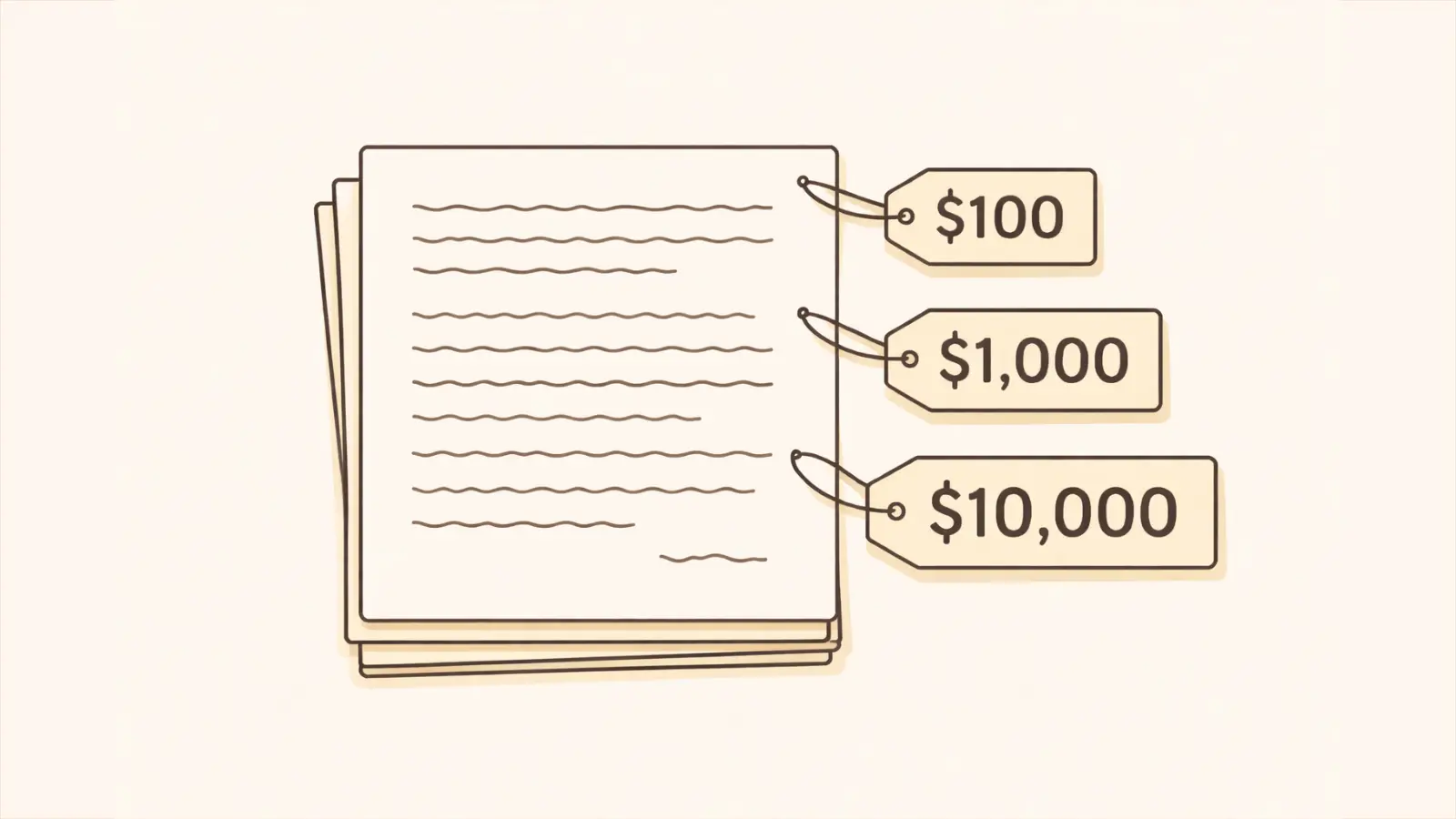
One of the first questions writers ask when they finish a manuscript is: "How much will editing cost?" The answer is frustratingly vague because editing prices vary wildly based on the type of editing, manuscript length, genre complexity, editor experience, and even geographic location.
This guide provides real numbers for manuscript editing costs in 2026. We'll break down the different kinds of editing, what professionals charge, why prices vary so much, and how writers on tight budgets can still get quality feedback. By the end, you'll know exactly what to budget and where your money goes.
The Different Types of Editing
Before we discuss costs, let's clarify what you're paying for. Manuscript editing isn't a single service; there's a spectrum of interventions, each addressing different aspects of your book.
Developmental Editing (or Manuscript Critiques) focuses on the big-picture story elements: plot structure, character development, pacing and tension, point of view and voice, theme and emotional coherence, and overall narrative effectiveness. This is the first stage of professional editing and addresses whether your story works as a whole. Editors provide detailed feedback, usually in an editorial letter, and sometimes margin notes identifying specific problem areas.
Line Editing works at the sentence and paragraph level to improve flow, clarity, and style. Line editors tighten prose, eliminate awkward phrasing, strengthen voice and tone, improve rhythm and readability, and ensure consistency in style. This happens after major structural issues are resolved because there's no sense tightening prose that you'll eventually cut anyway.
Copyediting addresses grammar, spelling, and punctuation; consistency in facts, names, and details; word choice and usage errors; and basic formatting issues. Copyediting makes your manuscript technically correct and consistent.
Proofreading is the final pass before publication, catching typos, formatting errors, and any remaining minor mistakes. This happens after all other editing is complete and is the lightest intervention. It might sound redundant, but there is always a pesky typo lingering in the manuscript.
Most fiction writers need developmental editing first, followed by line editing or copyediting, depending on their prose quality. Proofreading comes last, often after formatting for publication.
Full Comparison: Every Option at a Glance
| Service | Type | Cost (80k-word novel) | Turnaround | Best For |
|---|---|---|---|---|
| Professional Developmental Edit | Developmental | $1,600–$9,600 | 4–12 weeks | Manuscripts needing deep structural work |
| Professional Line Edit | Line-level | $2,400–$6,400 | 3–6 weeks | Polishing prose after structure is solid |
| Professional Copyedit | Technical Edit | $1,200–$3,200 | 2–4 weeks | Pre-publication technical correctness |
| Professional Proofread | Final pass | $800–$1,600 | 1–2 weeks | Final error catch before publication |
| Inkshift manuscript analysis | Developmental | $25–$100 | Minutes | Early drafts, structural issues |
| Inkshift's Line Editing feature | Line-level | $60 | Minutes | One-time prose pass after structural revision |
| Inkshift's Copyediting feature | Technical Edit | $20 | Minutes | Grammar, punctuation, usage, and consistency |
| Critique Partners | Developmental/craft | Free | Weeks–months | Writers with strong critique networks |
| Beta Readers | Reader reaction | Free | Weeks–months | Testing story landing with real readers |
Developmental Editing Costs
Developmental editing typically costs the most because it requires the most time and expertise. Editors read your entire manuscript closely, analyze complex story elements, and provide actionable guidance for revisions.
Per-word pricing: Most developmental editors charge between $0.02 and $0.12 per word. The wide range reflects differences in editor experience, manuscript complexity, and market positioning. On the lower end ($0.02-$0.04 per word), you might find newer editors or those working through platforms like Reedsy. Mid-range editors ($0.04-$0.08 per word) typically have several years of experience. Premium editors ($0.08-$0.12 per word) often have publishing house experience or specialized genre expertise.
What this means for your manuscript: For an 80,000-word novel, developmental editing costs break down as follows: At $0.02/word: $1,600; at $0.04/word: $3,200; at $0.08/word: $6,400; at $0.12/word: $9,600.
Per-page pricing: Some editors charge by manuscript page instead of word count, typically $7.50-$20 per page. Assuming standard formatting (250 words per page), an 80,000-word manuscript is about 320 pages, costing $2,400-$6,400.
Flat-rate pricing: Experienced editors sometimes quote flat rates for developmental editing, typically ranging from $2,000-$8,000 for a novel-length manuscript, depending on the factors mentioned above.
Turnaround time: Traditional developmental editing typically takes 4-12 weeks, depending on the editor's workload and your manuscript's length. Rush fees can add 25-50% to the cost.
Note: that's 4-12 weeks from the start of the contract. Skilled editors are worth waiting for, but they might not have room in their schedule immediately.
Line Editing Costs
Line editing sits between developmental editing and copyediting, focusing on how you tell your story rather than what story you're telling.
Typical rates: Line editors generally charge $0.03-$0.08 per word, or $45-$85 per hour. Some editors combine line editing with light copyediting, which affects pricing.
For an 80,000-word novel: Expect to pay $2,400-$6,400 for line editing. This assumes your manuscript is in good structural shape. If major developmental issues remain, line editors may recommend addressing those first to avoid polishing prose that might be cut or heavily revised.
Turnaround time: Line editing typically takes 3-6 weeks for a full manuscript.
For writers who want an automated alternative after completing their structural revisions, Inkshift's Line Editing feature costs $60 for a manuscript of up to 250,000 words. It applies a one-time pass focused on clarity, flow, rhythm, dialogue, and style. Unlike an editor or always-on writing tool, it does not offer a collaborative back-and-forth while you revise; a human line editor remains the stronger choice when you want personal judgment, discussion, and an ongoing editorial relationship.
Copyediting Costs
Copyediting is more mechanical than developmental or line editing, focusing on correctness and consistency rather than creative judgment.
Typical rates: Copyeditors charge $0.015-$0.04 per word, or $30-$50 per hour. The variation depends on how clean your manuscript is and the level of intervention required.
For an 80,000-word novel: Budget $1,200-$3,200 for copyediting. Manuscripts with more errors, inconsistencies, or technical issues will land on the higher end.
Turnaround time: Copyediting generally takes 2-4 weeks.
Inkshift's Copyediting feature costs $20 for a manuscript of up to 250,000 words and applies a one-time pass for grammar, spelling, punctuation, usage, and consistency. Grammarly and ProWritingAid are better suited to writers who want continuous, interactive suggestions while working in a document. A human copyeditor may still be preferable for specialized subject knowledge, personal judgment, or the ability to discuss individual changes.
Proofreading Costs
Proofreading is the least expensive editing stage because it requires the lightest touch. It only catches errors that slipped through previous edits.
Typical rates: Proofreaders charge $0.01-$0.02 per word, or $20-$30 per hour. Some charge per page at $1-$3 per page.
For an 80,000-word novel: Expect to pay $800-$1,600 for proofreading. This assumes your manuscript has already been through copyediting and is relatively clean.
Turnaround time: Proofreading typically takes 1-2 weeks.
Why Editing Prices Vary So Much
If you request quotes from multiple editors, you'll likely see significant price differences. Understanding why helps you evaluate whether you're getting value or overpaying.
Editor experience: An editor with 20 years at a Big Five publisher will command higher rates than someone starting out. You're paying for expertise, industry knowledge, and a proven track record.
Manuscript condition: A polished draft that's been through multiple self-edits costs less to edit than a rough, first-draft submission. Editors may quote higher rates if your manuscript needs substantial work.
Genre complexity: Fantasy and science fiction manuscripts with extensive worldbuilding, multiple POV characters, and complex magic systems require more editorial attention than contemporary romance or literary fiction. Editors often charge more for these genres.
Manuscript length: While per-word pricing accounts for length, very long manuscripts (120,000+ words) may command slightly higher per-word rates due to the sustained focus required.
Timeline: If you need editing completed in 1-2 weeks rather than the standard 4-6 weeks, expect to pay rush fees of 25-50% extra.
Deliverables: Some editors include follow-up calls or revision support in their base rate. Others charge for these services separately. Make sure you understand what's included before committing.
Total Cost for Complete Editing: What to Budget
If you're looking to get traditionally published, remember you're not expected to hire a professional editor (that's what the publisher is for). If you're self-publishing, everything falls on you, including editing. Here's what to budget:
Budget tier ($4,000-$8,000): Developmental editing: $1,600-$2,400; Copyediting: $1,200-$1,600; Proofreading: $800-$1,200; Total: $3,600-$5,200
Mid-range tier ($8,000-$15,000): Developmental editing: $3,200-$4,800; Line editing: $2,400-$3,600; Copyediting: $1,600-$2,400; Proofreading: $1,200-$1,600; Total: $8,400-$12,400
Premium tier ($15,000+): Developmental editing: $6,400-$9,600; Line editing: $4,000-$6,400; Copyediting: $2,400-$3,200; Proofreading: $1,600-$2,000; Total: $14,400-$21,200
We cover this in detail in our overview of the publishing industry, but many authors also mix and match. They might trust themselves to proofread, and put more budget behind developmental editing, or vice versa. There's no one size fits all. Do what's best for your book and your own skillset.
Affordable Alternatives
If traditional editing costs are beyond your budget, several options don't require sacrificing quality feedback.
Manuscript Critique Services
Modern AI tools provide easy access to developmental and line editing. Services like Inkshift provide instant manuscript feedback for a fraction of the cost.
Inkshift pricing:
- $25 Editorial Critique: Developmental-level feedback on structure, character, pacing, plot, and prose quality, plus marketability analysis and sample query materials.
- $35 Revision Plan: Everything in the Editorial Critique, plus chapter-by-chapter implementation guidance that transforms abstract feedback into concrete action items.
- $100 Markup: Line-by-line comments across your entire manuscript, combining developmental insights with specific prose suggestions.
- $60 Line Editing: A one-time full-manuscript pass focused on clarity, flow, rhythm, dialogue, and style.
- $20 Copyediting: A one-time full-manuscript pass focused on grammar, spelling, punctuation, usage, and consistency.
What this means: Instead of spending $2,000-$8,000 on developmental editing, you can get sophisticated AI analysis for $25-$100, delivered in minutes rather than weeks. This makes professional-level feedback accessible to every writer, regardless of budget.
Best use: AI critiques are most useful early, when you need to identify structural issues before investing in sentence-level editing. After revising, you can use a one-time editing service such as Inkshift's Line Editing or Copyediting features, work continuously with software such as ProWritingAid or AutoCrit, or hire a human editor when you want personal judgment and collaboration. Proofreading remains a separate final stage.
For more on how AI manuscript editing works, see our guide.
Critique Partners and Beta Readers
Critique partners (fellow writers who exchange feedback) and beta readers (readers who provide reactions) offer free alternatives to professional editing.
Costs: Time and reciprocal effort. You'll typically trade manuscripts with critique partners, meaning you invest time editing their work in exchange for feedback on yours.
Value: Critique partners can provide valuable craft-level insights if they're experienced writers. Beta readers offer authentic reader reactions that help you understand how your story lands.
Limitations: Most critique partners and beta readers aren't trained editors. They can identify what's not working but may struggle to diagnose why or suggest solutions. For guidance on finding quality critique partners, check out our article on finding great novel critique partners.
Editorial Software and Automated Tools
Tools like AutoCrit ($30/month), ProWritingAid ($120/year), and others provide algorithmic analysis of your manuscript.
Value: These tools identify patterns like pacing issues, repetitive words, dialogue balance, and genre benchmarking. They're useful for self-editing and can catch issues you might miss.
Limitations: Software can flag potential problems but can't evaluate whether your creative choices work in context. You still need to interpret findings and implement changes yourself.
Conclusion
Editing can cost a few hundred dollars or well over $10,000. Early drafts need structural insight. Later drafts, precision. The smartest investment isn’t necessarily the most expensive one; it’s the one that matches your manuscript’s current stage.
Understand what each level of editing provides, allocate your budget strategically, but don't skip editing entirely. As authors, we're too close to our own stories to see their flaws. Whether it's beta readers or critique partners, AI-powered critiques or traditional editors, you've spent countless hours writing the book. It's worth investing a little more to make it the best it can be.