
Is Your Manuscript Ready to Query?
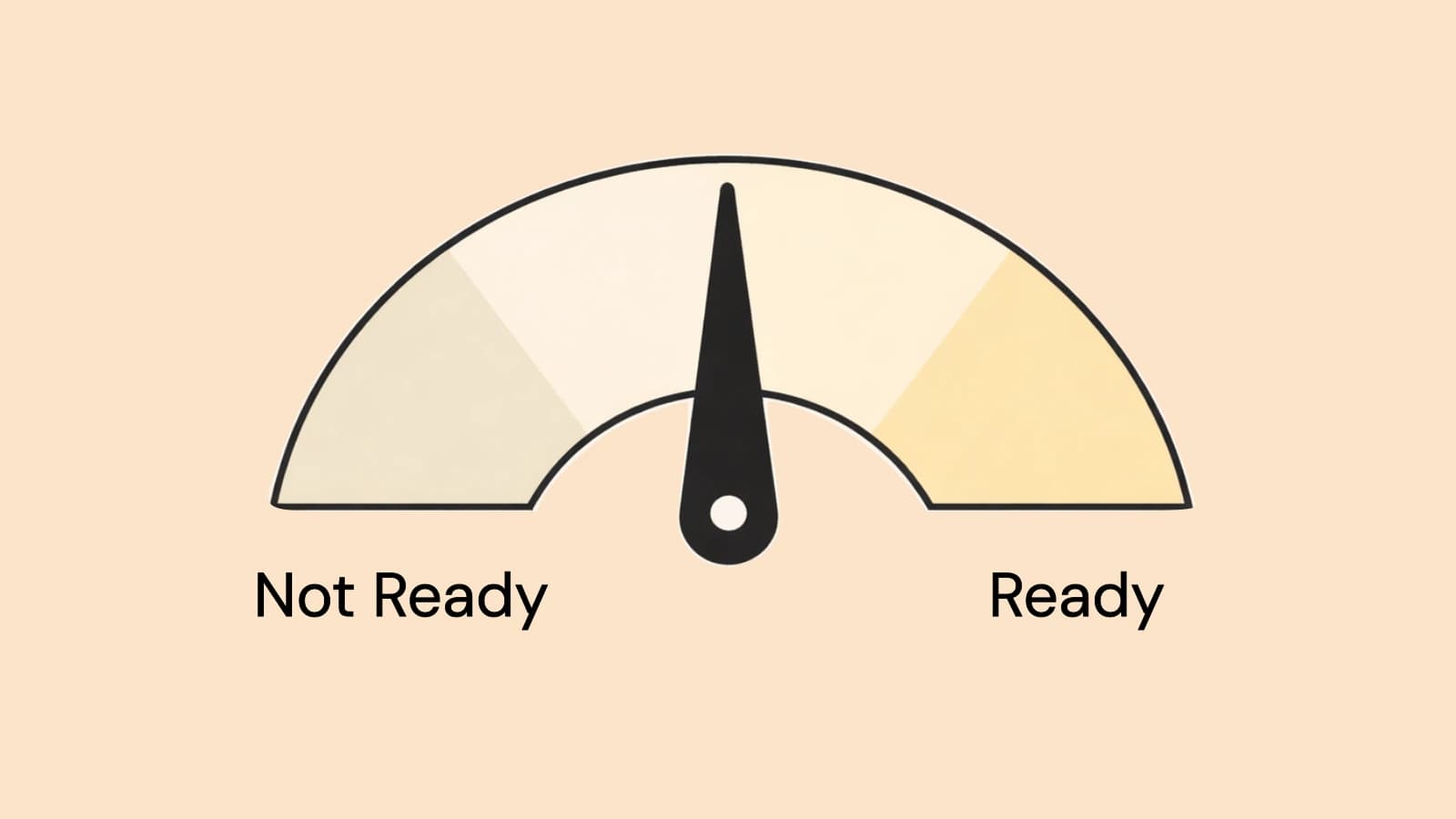
You've typed "The End." You've revised multiple times. You've worked through beta reader feedback, and now you're staring at a list of literary agents, ready to click send. But a nagging question persists: Is my manuscript really ready?
Querying too early can sabotage publishing chances. Agents receive hundreds of queries every month. If your manuscript has obvious structural flaws, weak character development, or pacing problems, they'll pass, and most agents rarely reconsider the same project later.
So how do you know when your manuscript has crossed the threshold from "needs more work" to "ready to query"? This guide provides a comprehensive self-assessment checklist to help you make that call objectively. By the end, you'll know exactly where your manuscript stands and what, if anything, needs attention before you hit send on those query letters.
The Reality of Agent Expectations
Before we dive into the checklist, let's establish realistic standards. Agents don't expect perfection. They know your manuscript will go through additional editing if you sign with them. Publishers provide developmental editors, copy editors, and proofreaders.
What agents do expect is a compelling story told competently. Your manuscript should demonstrate:
- A plot that hooks readers and maintains narrative tension
- Characters readers connect with and care about
- Professional-level prose (though not every sentence needs to be poetry)
- Proper formatting and crisp grammar
- Understanding of genre conventions and reader expectations
- A satisfying ending that delivers on the story's promises
You need a strong (not flawless) manuscript that showcases your storytelling ability and would appeal to readers in your target market. And of course, you need a compelling query letter, but we won't touch on that here.
Story-Level Readiness: The Big Picture
These questions address whether your story works as a whole. If you're answering "no" or "I'm not sure" to multiple items in this section, your manuscript likely needs another revision before querying. And of course, this exercise doesn't work if you're not as objective as possible.
Plot and Structure
Does your opening hook readers within the first pages? Your first chapter should establish character, introduce conflict, and give readers a reason to keep reading. If your story doesn't get interesting until chapter three, that's a problem. Agents often decide whether to continue reading based on the first 5-10 pages. Your hook needs to do its job.
If you answered no to this question, this article can help.
Are the stakes clear and escalating? Throughout your manuscript, can readers articulate what your protagonist stands to gain or lose? Do those stakes increase as the story progresses, building tension toward the climax?
Does every scene move the story forward? Each scene should either advance the plot, deepen character development, or ideally both. If you can remove a scene without affecting the story, it probably shouldn't be there. This is one that's hard for writers to see themselves. Because you wrote it, every scene is meaningful. Pay attention to scenes beta readers called 'slow' or 'boring.'
Is your pacing consistent with genre expectations? Thrillers should maintain relentless tension. Romance should balance relationship development with external plot. Literary fiction can take a more measured pace, but should never feel stagnant. Does your manuscript meet your genre's pacing standards?
Does the climax deliver on the story's central conflict? Your ending should resolve the primary tension you've been building throughout the novel. It should feel earned, not convenient or rushed. And yes, if you're pitching your novel as 'standalone with series potential,' that still means you must resolve the main conflict.
Are there plot holes or logical inconsistencies? Do events make sense given what's been established? Are there moments where characters act out of character just to make the plot work? If you notice this, readers (and agents) will too.
Character Development
Are your main characters compelling and complex? Do they have clear motivations, internal conflicts, and character flaws? Are they more than a collection of traits? Do they feel like real people?
Do your characters have distinct voices? If you removed the dialogue tags, could readers tell who's speaking based on word choice, rhythm, and personality?
Does your protagonist change or grow? By the end of the story, has your main character learned something, overcome an internal obstacle, or evolved in a meaningful way? Character arcs are fundamental to satisfying fiction. See our guide on character arcs.
Are supporting characters necessary and well-developed? Secondary characters should serve the story. They should feel real, not like cardboard cutouts existing only to help the protagonist.
Do characters make decisions that drive the plot? Your protagonist should be active, not passive. They should make choices that have consequences, not only react to events happening around them.

Theme and Emotional Resonance
Does your story explore meaningful themes? Strong novels resonate on more than a plot level. What deeper ideas or questions does your story examine? Are those themes woven throughout the narrative? When readers connect deeply with a theme, they remember the stories for years to come.
Will readers emotionally connect with your story? Can you identify specific scenes designed to make readers feel tension, heartbreak, triumph, or fear? Does your manuscript achieve those emotional beats?
Craft-Level Readiness: The Execution
These questions address how well you've executed your story at the prose and technical level.
Prose and Style
Is your prose clear and readable? Aside from literary fiction, good prose is often invisible. Readers should focus on the story, not stumble over awkward phrasing. Read your work aloud. Does it flow naturally?
Have you eliminated purple prose and overwriting? While beautiful language has its place, excessive description, adverbs, and flowery metaphors can suffocate your story. Is your prose tight and does every sentence have purpose?
Are you showing the important moments? The maxim "show, don't tell" doesn't mean never summarizing, but key emotional beats and plot points should be dramatized, not reported. Many writers struggle with how to show, not tell.
Have you varied sentence structure and length? Rhythm matters. Too many long, complex sentences bog down pacing. Too many short, simple sentences sound choppy. Does your prose have natural variation?
Is your dialogue natural and purposeful? Do people speak like actual humans, or do they sound like they're reading from a script? Does dialogue reveal character and advance the story?
Point of View and Voice
Is your POV consistent? If you're writing in third-person limited, do you stay in your POV character's head? If you're using multiple POVs, are transitions clear? Head-hopping confuses readers and suggests inexperience.
Does your narrative voice suit your story? Is the tone appropriate for your genre and protagonist? A dark thriller should sound different from a cozy mystery.
Have you maintained the right distance from your characters? Are you too close (overwhelmed by internal monologue) or too distant (emotionally detached narration)?
Tense and point of view should feel natural in your story, but along with head hopping, they can be difficult to spot and master in your story. Pay close attention. Errors here can break reader immersion.
Technical Competence
Is your manuscript properly formatted? Standard manuscript format includes: double-spacing, 12-point readable font (Times New Roman or similar), 1-inch margins, chapter headings, page numbers, and your name/title in the header. Agents expect professional presentation.
Have you eliminated typos and grammar errors? Your manuscript doesn't need to be perfect, but it should be clean. Run spell-check. Read it through one more time. Multiple errors per page signals a lack of professionalism.
If you want a final technical check across the complete manuscript, Inkshift's Copyediting feature applies a one-time pass for grammar, spelling, punctuation, usage, and consistency. This is not a requirement for querying. Agents expect a clean, competent manuscript, not publication-perfect copy, but the extra pass can help prevent avoidable errors from distracting from the story.
Are there obvious craft mistakes? Excessive adverbs, filter words ("she felt," "he saw"), telling instead of showing important moments, purple prose, or clichéd descriptions all suggest the writer needs more craft development.
Genre and Market Readiness
Does your manuscript fit clearly into a genre? Agents and publishers sell books to specific markets. "It's a little bit of everything" is a red flag. Can you identify your genre and comparable titles? Where would it sit on a bookshelf?
Does it meet genre conventions? Romance readers expect a happily-ever-after or happy-for-now. Mystery readers expect clues and a resolution. Fantasy readers expect worldbuilding. Are you delivering what your genre audience expects?
Is your word count appropriate? Different genres have different length expectations. Adult fantasy can run 100,000-120,000 words. Contemporary romance typically sits at 70,000-90,000. Middle-grade fiction is 40,000-60,000. Is your manuscript in the right range?
Can you identify 3-5 comparable titles? These should be books published in the last 3-5 years in your genre that share thematic or stylistic similarities with your manuscript. If you can't identify comps, you may not know your market well enough. See our guide on how to choose comparable titles.
Have you written a compelling query letter? One that follows proper conventions, gets the premise of your story on the page, and showcases your writing ability? Have you researched agents and learned about batching query letters for better success?
The Self-Assessment Score
Go back through the checklist and count how many questions you confidently answered "yes" to versus how many were "no" or "I'm not sure."
Mostly "yes" answers (90%+): Your manuscript is likely ready to query. Consider getting one final objective assessment to confirm, then start researching agents.
Mixed answers (70-90% "yes"): Your manuscript needs another revision pass. Focus on the areas where you answered "no" or "I'm not sure." Consider getting feedback to identify specific weaknesses.
Many "no" or "unsure" answers (below 70%): Your manuscript isn't ready yet. This doesn't mean it will never be, but it needs more work. Focus on fundamentals: plot structure, character development, and prose clarity.
Getting Objective Assessments Before You Query
Self-assessment is valuable, but writers are notoriously bad at evaluating their own work objectively. We're either too harsh (paralyzing perfectionism) or too generous (sending out manuscripts before they're ready). We know every plot thread, hidden motivation, piece of foreshadowing, and rule of the magic system. It's hard to put ourselves in the reader's shoes.
Professional feedback can provide the objectivity you need. Services like Inkshift analyze your manuscript across all the areas covered in this checklist: structure, character, pacing, prose quality, genre positioning, and marketability. The report is delivered in minutes, giving you a third-party snapshot of where your book is at.
Red Flags That Mean "Not Ready Yet"
Certain signs definitively indicate your manuscript isn't ready to query, regardless of how many checklist items you can answer "yes" to.
You just finished your first draft. First drafts are never ready. Give yourself time to revise, get feedback, and revise again.
You haven't shared it with anyone. If no one except you has read your manuscript, you lack the outside perspective necessary to identify problems.
Your opening chapter has been rewritten 20 times but the rest of the manuscript only once. This suggests the later chapters aren't as polished as the opening. Agents request full manuscripts, and they'll notice if quality drops after the first chapter.
You're not confident about major story elements. If you're uncertain whether your ending works or whether your protagonist has a satisfying arc, readers will be too. Fix those fundamental issues before querying. Trust us, readers notice everything.
Conclusion: Trust the Process, But Verify
Use this checklist to identify gaps in your manuscript. If you find problem areas, revise strategically to address them. If you're mostly checking "yes" boxes but want objective confirmation before sending queries, Inkshift can give you a quick outside perspective to see how your manuscript is shaping up.
And remember, when you answer yes to most questions, it's time to take the leap!